Middle Georgia to the coast: Alligator Country!
Article and photos by John Trussell
You might be surprised to hear that Georgia is home to an estimated population of around 225,000 alligators and many live in your area if you live in South Georgia. I live in Houston County and gators are common in Houston Lake, Lake Joy, Flat Creek Public Fishing Area, the nearby Ocmulgee River and our other lakes and streams. You may not see them during daylight hours, but a few are normally out there and they usually come out at night to forage for food. Most gators live south of the fall line south of the fall line, an invisible marker that connects Columbus to Macon to Augusta, that commonly divides north from South Georgia. No matter where you live, it’s time to get GatorWise, says the Georgia Department of Natural Resources’ Wildlife Resources Division (WRD).
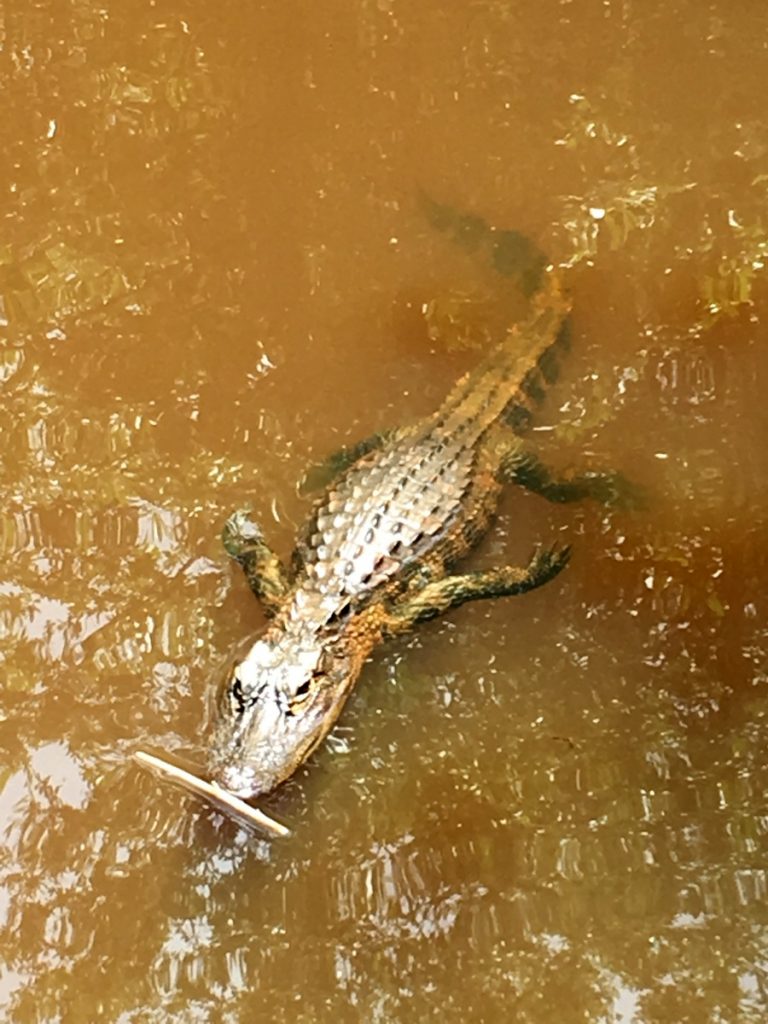
“As the weather warms up and people are spending more time outdoors, it’s a great time to remind everyone that it is normal to see alligators moving around and basking in rivers, ponds and lakes in the southern part of the state,” said Kara Nitschke, WRD’s state alligator biologist. “Alligators are native to Georgia and are critical to the health and balance of our ecosystems, so being GatorWise means we know how to modify our behavior to minimize any potential conflict.”
Georgia has plenty of gators and we even have a gator season where a limited number of hunters are allowed to gator hunt if they apply for the special DNR permit. Apply for the Alligator permit by July 15 of each year and if you are not drawn, you will accumulate points to help your application in the future. Go to www.Georgiawildlife.com for more information. The website has a very detailed guide to gator hunting, so check it out.
This writer got lucky a few years ago and drew a gator permit for the Savannah River area where I harpooned and dispatched a large 10-foot gator. The tail section is the most edible section, and it tastes sorta like chicken!
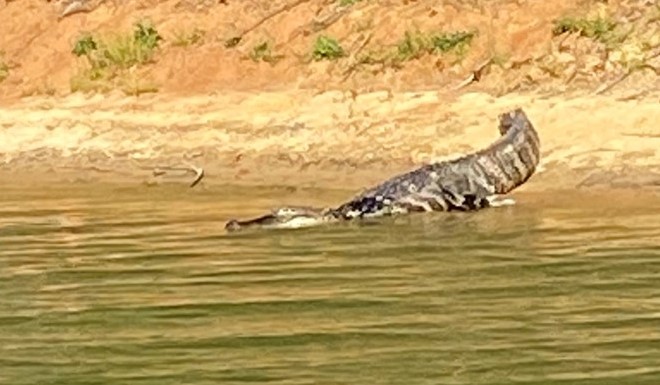
A gator slipping into the water at Flat Creek Public Fishing Area near Perry.
I was fortunate to hunt with gator guide Jack Douglas, who is a licensed trapper for the Georgia DNR. If there is a troublesome gator out there around Savannah, Jack was the man they called to capture the gator. Many years ago, an elderly woman was walking her small dog along a canal near Savannah and a gator leaped out of the water to attack the dog. The woman tried to scare off the gator and ended up being bitten by the gator and dragged into the canal and drowned. She was reported missing and someone reported some screams coming from the canal area. They put the facts together and soon Jack was called in to find the woman and track down the gator. He was able to find the deceased lady and soon he had the dead gator in the back of his pickup truck, a problem no more. Jack was very good at his dangerous job!
If you are around a freshwater lake or stream in Houston County, be aware of gators!
- Assume Alligators are Present: Alligators can live in any water body in their range. They are good at hiding and may be found in places where you have never seen them, especially after storms or floods. Keep your distance.
- Never Feed Alligators: Feeding alligators on purpose or by accident is illegal in Georgia. This is because this action can cause alligators to associate people with food and lose their natural fear of people.
- Don’t Dispose of Fish or Food Scraps in the Water: Throwing fish scraps in the water is one of the most common ways people unintentionally feed alligators. Properly dispose of bait, fish scraps and food items.
- Never Harass, Capture or Handle an Alligator: Approaching, capturing or handling alligators puts you at risk. View and photograph alligators from a distance.
- Be Responsible for People and Pets in Your Care: Alligators do not know the difference between pets and prey. They will quickly attack a dog walking along the bank of a river, canal or pond. Keep pets on a leash and away from the water’s edge. Supervise small children near the water, stay close and never leave them alone!
- Maintain Awareness: Observe alligator warning signs. Stay away from the water if you see an alligator. Avoid swimming in areas with dense vegetation and only swim during daylight hours. It is best to always avoid swimming in rivers and streams, not only to avoid gators, but water moccasins and other poisonous snakes. Personally, I only swim in swimming pools! Let’s be careful out there!
John Trussell is a freelance writer making his home in Warner Robins. He is a member of the Georgia Outdoor Writers Association and a 2014 inductee into the Georgia Hunting and Fishing Hall of Fame. John can be contacted at jtrusswr@gmail.com